Showing posts with label Special Needs. Show all posts

Sunday, 20 August 2017

An Accessible Home - We've Moved In!!

Hi everyone

I realised somewhere along this journey that I forgot to update and really thanks to winter, selling our current house and the racing back and forth between the two properties I just had NO motivation to complete the blog!
That was really remiss of me as many of you were following this progress with interest and hopefully to learn from our experience.

So let me update you...
A few things to move in

We Moved 3 weeks ago

The big news is that we took ownership of the new house and moved in 3 weeks ago 1 day before our son turned 10 years old

To add to the fun it was school holidays, our house sale had fallen through so we had to get the house ready for open homing again, and I was sick with a bad cold!
It was a bit of a hectic period in our lives. We had to hold off moving in so we could keep our current house open home friendly with furniture.  So we moved camping gear to the new house and had a small amount of food/tea making facilities and started spending a few hours a day just hanging out at the new house getting used to the vibe.  Then all in a rush my Sister and Brother in Law arrived, and the next day the movers were there and BANG! We moved into the new house.

What was the final few months like in the build?

Thats what you all really want to know, as the house progressed it went all quiet and we couldn't really visit the house as it was constantly busy with tradespeople installing gib, painting walls, landscaping the section or generally busy within.  In the final month I was onsite often to give information to the builders on where we wanted rails, the shower seat, the hooks for our sons indoor swings and lots more.  In the last week we had the Occupational Therapist visit and look at the rails, ramp, deck and thresholds to ensure we had to all correct.

Was it a drama? Yes, it WAS!

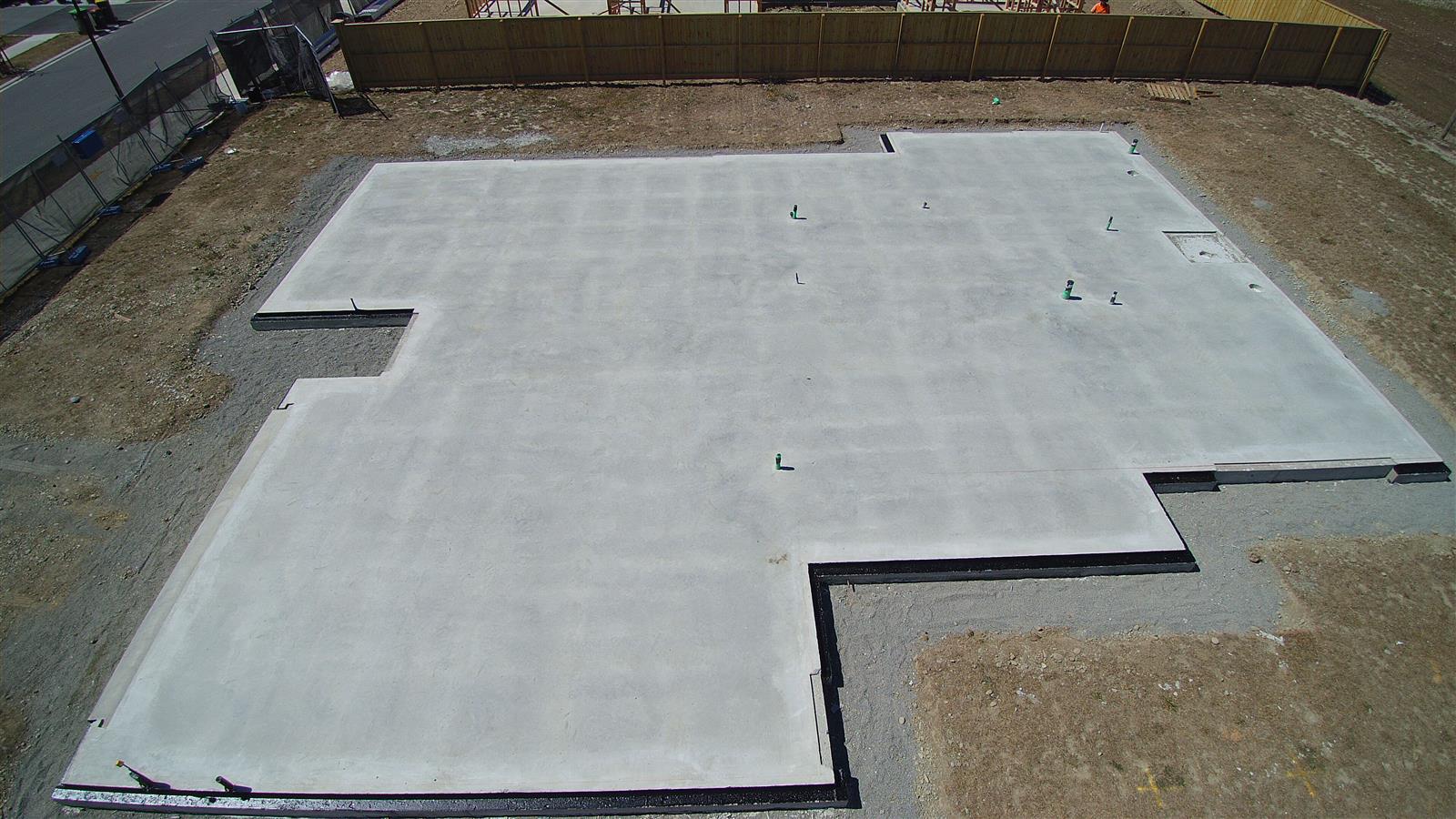
Unfortunately as we neared the end a series of issues arose which threw us all.  The major stumbling block?  The front door, which was an aluminium prefabricated frame and door.  When we had the deck and ramp installer visit the site to discuss installation he pointed out the door and threshold weren't going to be level and his ramp wouldn't help.  We were shocked! We just hadn't noticed that the frame of the front door wasn't level, we just assumed that our Building Company understood our needs and it was all in hand.  This was late on a Friday when the house was all locked up and the Builders had gone home.  So over the weekend we fretted, and on Monday I organised a meeting onsite with EVERYONE to go over the issues.  It was discovered that the decking contractor was right, the door frame did in fact have an uneven lip all the way around and we were never going to have a level entry.  I got upset, I got angry, I wandered off for a wee cry.  By the time I got back the husband had come up with an idea.  He headed to the prefabricators in his lunchhour and had a long meeting with them where they designed a commercial door frame that would accommodate our front door and provide a level entry.  The building company admitted their mistake and were willing to cover all the costs.  The only issue?  It set our move in date back by 3 weeks. In the end it was a big job to remove the old frame, chop out a large piece of the concrete slab at the front door so that it could be recessed more and allow a strip drain for the new door and any water to drain away.  It took them the best part of two days to replace the door frame and rehang the door, then re-level the inner concrete floor and relay the vinyl planking at the doorway.  But in the end we had a perfect level entry door which our son can easily roll in and out of! We've tested it quite a few times since then.
This was the original frame for our front door that
as you can see is hardly flush

Semantics and Understanding
What we discovered with the door fiasco was that what we considered to be level entry had a different meaning to the building company and builders in general.  To them Level meant NO STEPS, or all on one level, it didn't mean flush, no edge/lip/frame that could stop a ball, wheel or whatever rolling from outside to inside without issues.  They learnt what we meant, we realised we were innocently trusting people to understand our needs and they just didn't get it.  We had to be really on top of it but we hadn't been.  We should've resolved the problem months before but just hadn't spotted it. So we get that now, but it all worked out in the end and we're all happy.
Evan trying out the roll in/roll out fix for the deck through the sliding doors


But do we love the place now?

Short answer? YES!
Its great having all the turning space, the huge bathroom with ease of access between our sons bedroom.  Its been great to take him to the toilet, then into the bath, and then into his bedroom to get dried and dressed and into bed each evening.
Having an internal access garage is great, the wide halls and doorways are fabulous and such a life changer! It took a good week to get used to the light switches being at 900mm high from the floor, which is the Lifemark standard for wheelchair users.  Also the plugs all being at a higher level too. But our son has enjoyed having switches at HIS level.  
All the turning space and room in our main living area is great although we do have to get used to how big the space is and not to fill it up with stuff!
Our son loves the place, he is very comfortable and enjoys moving about, checking things out. 
Just after we moved our son got a newer larger wheelchair and when that arrived we realised very quickly why we designed the place the way we did.  It was obvious the place is made for future growth and is going to work admirably as he gets older.
Before the furniture went in - a great place to practice crawling


Lifemark - FIVE STARS!

Yes, at the end of the build we got the Building Company to send in the final assessment with a few photos from us of the thresholds.  After a bit of discussion from the assessors with my husband they were satisfied that our home met their highest rating and we were awarded the 5 Star Lifemark Certification.  We even have the certificate to prove it.  What does that mean?  Well if you followed other blog posts about us deciding on the Lifemark process you'll know that we have proven our home meets the best standard for accessible and universal house design.  We have hopefully got a place that will continue to work for those principals we were assessed for.

Is there anything we could change?

Well when we started this process our son was quite good at standing transfers and we were working hard to get him self transferring as well.  One of the things we did and still do is help him into and out of the car.  So he with help gets out of his wheelchair and we help him to lift into the car and sit down in his carseat.  There is quite a bit of help needed, and lifting and adjusting, as well as picking up the wheelchair and putting it in the back of the car. Hes now 10 years old, so hes heavy, and tall, and its awkward, heavy and tiring work for anyone helping him.  So we saw the Hospital Car Support team who assess his vehicle needs in the past year as well.  The outcome?  He really should be in a van with a hoist, and his new wheelchair accommodates that, it has places to add tie downs, and a chest harness for travelling in a vehicle.  So we realised that the new house design didn't have a big enough garage with a high enough garage door to allow a high top van and a wheelchair hoist to be used inside.  We groaned at that oversight, but really a year ago we didn't think that was even an option, perhaps that was silly of us, but its too late now.  We think the van will just have to be parked in the drive and the hoist used there when we eventually get around to using it.  Right now he still is helped to get into and out of the car in the garage with no problems.  

Another issue?  its awkward to get out to the washing line, we either have to go out the front door, around the footpath, through the swing gate (no handle he can reach through and use), and then out to the line.  Or it off to his bedroom, pull open the sliding doors, and down the portable ramps we have there which are just a little too low (about 1-2cm?) and down to the line.  Or from the garage where the laundry is, through a standard sized back door, put in a portable metal ramp, and off to the washing line.  But there is also from garage, out to living area deck, down ramp by the master bedroom and along the grass to the washing line (right now thats inaccessible thanks to the weather turning the new grassy ground into a bog).

Then there is the letterbox, and the front door ramp...the footpath off the ramp ends in a 90 degree turn to the left and the letterbox, but there is grass around the letterbox and at the end of the footpath.  So in order for him to get to the letterbox he has to trundle around an awkward (although wide) right angle, down onto the driveway and slide up to the letterbox but he needs to drop his front wheels onto grass in order to open the flap to see if letters are within. The letterbox really needs a handle otherwise he can't open it, it also needs a few concrete pavers to stop his wheelchair sinking into the soil!

But those are minor and all in all the place we designed really well.  I am sure in time we'll think of other things we could've done differently, but right now we are happy to be living in a purpose built home that has at least taken some of the stress off living with a kid with a disability.

thanks for following our journey

Vivien


Friday, 24 March 2017

BUILDING AN ACCESSIBLE HOUSE - THE BUILD CONTINUES - Week 7 Update


Hi everyone

I bet you've all been wondering how this build has been going and I have been meaning to update the blog with where its at right now.  Well we have a Roof! So thats a start.  Its also been waterproof wrapped as we now head into Autumn, so even though its not weather-tight quite yet its still keeping the recent rain off the framing and most of the interior.  Next week the Brick exterior cladding starts, the windows are due, and we are also about to spend time with the electrician deciding on the lights, light switches and power points etc.  I will update a bit more on that further in the blog but first lets do a photo timeline update so you can all go OOH & AAH at it 😀

Photo Timeline

Week One

Week One - Day One - Excavation Starts

Week One - Day 5 - the rib raft floor starts

Week Two 

Week Two - Day 1 - the rib raft framing is down
Week two - Day 3 - the Concrete Slab is done

Week Three

The framing begins:

And Aerial shot taken by our builder showing the frame - it looks so like the plans!

Week Four

Looking at the spot the large sliding doors will go (this is the side of the house)

Looking at the front of the house the lounge windows to the left and the front entrance in the middle


Week Five 

An Aerial view of the trusses for the roof

The scaffolding is up and the roof goes on soon

The front of the house is now starting to look like a house

Week Six 

The roof is done! The waterproof wrap is being done and the
scaffolding will come down soon

Week 6 - Day 5 - the framing for the gib is already
 going into the garage - soon they will start to line the interior


Whats due next?

Well its Autumn here and the weather is starting to settle in so its great that they got the roof on when the weather was better and they will have a more or less dry area to work in.  In the next few weeks they will be pre-wiring the house, starting to put up the battens for the gib (drywall), reinforcing the walls where we want shelving or things hanging from the wall like rails, and obviously the exterior starts to come together.

LifeMark Accessibility and the Electrical Walkthrough

So next week we have the Electrical walkthrough with the Electrician to work out where lights will go, power outlets, heated towel rails and other items.  So the Husband has spent time going through our LifeMark assessment to make sure we have it all in hand and can spend time explaining to the Electrician just WHERE things can go.  

The guidelines are quite specific. For a start, plugs can't be put within 30 cm of the floor. For 'bonus points' plugs should be at a consistent height between 50 and 120 cm from the floor, and for even more points plugs should not be within 50 cm of an internal corner.

Humm... Keeping plugs out of the corners should be fairly easy, but having them all at mid-thigh height in all rooms will be be challenging,

One thing the Husband is keen on is recessed low-intensity lighting in the hall - like what you have on stairs - with the reasoning that we are often up in the night to check in on the boy. The number and placing of these lights has become a bit contentious.  He also worried about the power they would use for awhile - the LED lights are rated at 1W, but the driver losses need to be taken into account. Two 1W lights for 12 hours a day, for a month is about  1kWhr - or 20c of power. per month. Less than a cent a day to not stumble round in the dark every night is well worth while.

Talking of lighting, the location of light switches is also specified in the standard. They should be at the same height as the door handles, Must make sure that the electrician and builder agree about the handle height. We also need to have light-switches at both ends of the corridors, its giving us a small problem as we have three doors entering the end of the hall, so do not have a clear wall space to place the switch on! 

We also discussed including some hard-wired panel heater, which seem like a good idea as they will be low-profile and not obstruct moving a wheelchair around, and avoid having cables over the floor. The downside is we will need to know where the furniture will be to avoid having a heater where we will want to place the bed. It is a tough call, as we tend to have a heater on overnight during winter to help avoid winter snuffles and chills. Not having these also avoids having to decide what wattage heater to install. So a compromise might be to install an extra power point where we might want to hard-wire a heater once we get settled in. 

There is always so much to think about with these things its easy to get overwhelmed!  One thing I still wish we'd considered was removing the wardrobe doors and turning the wardrobe into a recess we can use for 'parking' equipment.  Other families have chosen to do that and it makes sense to have the wheelchair, walker and maybe the standing frame somewhere out of the way.  Of course we are also in the middle of teaching the young man to self transfer to his wheelchair, his walker and possibly the bed.  All this means that the equipment needs to be within easy reach.  No doubt as the house progresses we'll have a clearer idea of all that.

We'll try to update again as the build progresses, thanks for stopping by to view our blog!

Vivien

Sunday, 19 February 2017

BUILDING AN ACCESSIBLE HOUSE - THE BUILD BEGINS

Week one, day one - time to excavate the section


Hello and welcome to 2017!

Well we should probably have had an update on all the goings on and hiccups that have transpired since my last post about our new Accessible Home here in Canterbury, New Zealand. But life and Summer Holidays got in the way.  However since the resource consent came through a few weeks ago our build has now started! So we can now update the process as we go along.


Lifemark Update:

We got confirmation at the end of last year that our design and build earned a Provisional 5-Star Lifemark assessment which was both exciting and empowering.  We now know that our design should allow our son to live there happily and grow up without any further adaptations on the house or a new house being built to accommodate him in the future (unless he wants to move out and live independantly from us).
Over the summer our currently 9 year old wheelchair and sometimes walking frame boy grew and is rapidly outgrowing everything, his wheelchair, our car, his bed, his clothing, and in some respects our house! Its almost like this house can't come along fast enough despite the bittersweet regret of losing our little slice of paradise here in rural Canterbury.  So we have had to go through the process of requesting a new wheelchair, a car modification (or if necessary a new van with hoist), a hospital bed, and lots of other new equipment.  Its obvious hes not a little boy anymore but will soon be 10 years old.

Week One of the build and already they have the rib-raft base down

Too late for cold feet:

So our building company confirmed about 10 days ago that the new build was starting and emailed a login to their project management software online.  We popped around late in the afternoon of the first day to see progress on the section and instantly thought "Oh dear look at how small that section is".  We currently live on a section that is 2000sqm+ and this new section is 768sqm so you can see why yes, it is a lot smaller.  That is part of our decision, to down size the section so we can spend less time trying to keep the land from turning into a wilderness and more time giving our son the best life possible.  This house is designed to do that, to alleviate all the space issues, the ability to turn in the corridor, or walk past him in the kitchen, and a better flow and layout for all of us and especially our wheelchair user.  But, as you might imagine after spending 15 years living in a rural town with a large beautiful established garden there is a sense of regret and what might have been, just more realization of what we are leaving behind and all the memories we have made here.
Summer is also giving way to Autumn here so we also feel sad that this is the last summer we will ever spend in this place.  With these feelings is also the building excitement that in almost 5 months time we will be moving into a new purpose built house in a suburban environment within walking distance of schools, parks and the local Aquatic Centre (our favourite weekend space).
School started for the year two weeks ago too so life has quickly got busy and so far we haven't had too much time to even realise the big event ahead of us.  Life, appointments, school commitments, work and day to day events mean some days you forget that they are building a new house for us 8 minutes drive away.  

The New House Begins...

Week Two - Day 1 - Plumbing Services in - reinforcing mesh on

Its now the second week of the build and already the rib-raft slab is 80% complete and when we visited today the reinforcing mesh is on and plumbing for all the sinks, baths, and toilets etc was clearly visable.  It won't be long until the concrete is down and the framing starts.  The project management software is showing the end date of the build to be the end June so we now have an idea of just how quickly this house will be built! This year our son turns 10 years old at the end of July and we can't help but feel thats when we'll be moving into the new house, and what a birthday present that will be!

But does our son really want this change?

Something has been happening to our little man since we started visiting the building site, he often gets teary, clingy and a little upset.  He is non-verbal and talks with an ipad AAC software (see previous blog posts about that) so its often hard for us to understand just WHY hes upset.  He just is.  Often when we discuss the house and moving he gets teary.  We're starting to suspect hes not keen on the move and is starting to get upset at the thought of it.  We will have to sit down with him and try and discuss it with him and with luck he will tell us if this whole process is scaring him and leading to these unhappy moments.  Its going to be a big overwhelming experience for us all and is guaranteed to cause serious upheaval so this is not unexpected.  Just being gentle and calm with him and talk about it as positively as we can we're hoping will bring him around.

More to come...

So keep stopping by the blog and see how our build is going we expect to post more photos and updates as it progresses.

Vivien
Tuesday, 20 September 2016

Building an Accessible Home - an update

Hi All

Well its been a full on bunch of weeks deciding on fittings and hard flooring etc.  This will just be a quick update with a warning that when working with Building Companies be sure you ALL understand the requirements.  That what YOU are expecting matches what they are doing.  We have had a hiccup as we proceed with this which has just been a miscommunication.  We wrote on our list of requirements 'Extra Wide Doorways', we suspect we said what width that was (910mm) but as there is a Government Accessibility code that states doorways need to be at least 810mm wide (the door size) the Building Company Designers have innocently taken that Code as the means by which they are designing our house.  So rather than take our requirements they have assumed that we want to follow the "Code" and have designed based on that.
Our assumption was they were following our requirements rather than the code so we never took note before signing of the apparent differences.
So our suggestion would be if there are important features that are non-negotiable (like doorway widths) that you are VERY sure what they are going to be, and that there is an agreement in writing or at least a specified size written on the contract before you sign or pay for it.  Alas in our case nothing was written so we are hopeful they will understand our stance on the extra wide hallways and doors and make the change without too much cost to the overall plan.


If you are interested in the Government Accessibility code and perhaps designing a compliant 5 star home yourselves you can easily look it up here:


You can check out there Pinterest recommendations here:


thanks everyone and keep posted for the next few updates.  I am intending to blog about our choices and design.  We let our son choose the vinyl planking for the main living zone and I would have to say that kid has taste!

Vivien

Building an Accessible Home - an update

Hi All

Well its been a full on bunch of weeks deciding on fittings and hard flooring etc.  This will just be a quick update with a warning that when working with Building Companies be sure you ALL understand the requirements.  That what YOU are expecting matches what they are doing.  We have had a hiccup as we proceed with this which has just been a miscommunication.  We wrote on our list of requirements 'Extra Wide Doorways', we suspect we said what width that was (910mm) but as there is a Government Accessibility code that states doorways need to be at least 810mm wide (the door size) the Building Company Designers have innocently taken that Code as the means by which they are designing our house.  So rather than take our requirements they have assumed that we want to follow the "Code" and have designed based on that.
Our assumption was they were following our requirements rather than the code so we never took note before signing of the apparent differences.
So our suggestion would be if there are important features that are non-negotiable (like doorway widths) that you are VERY sure what they are going to be, and that there is an agreement in writing or at least a specified size written on the contract before you sign or pay for it.  Alas in our case nothing was written so we are hopeful they will understand our stance on the extra wide hallways and doors and make the change without too much cost to the overall plan.


If you are interested in the Government Accessibility code and perhaps designing a compliant 5 star home yourselves you can easily look it up here:


You can check out there Pinterest recommendations here:


thanks everyone and keep posted for the next few updates.  I am intending to blog about our choices and design.  We let our son choose the vinyl planking for the main living zone and I would have to say that kid has taste!

Vivien

Wednesday, 26 August 2015

Our Toilet Training Journey

Hi All, its been a long time between posts I have noticed and I seem to have gone away from my original intention of using this blog to discuss our communication journey so others might be able to use our experiences to learn too.  However, being a Special Needs Parent, you soon discover everything is just that little bit different from raising a 'normal' child.  Everything in our lives has been a challenge in one way or another, and toilet training has been no different.  We've had great progress that has been setback with surgeries and then illness and finally with us parents just deciding to leave it alone for a bit until other things our son was going through came right first.

Communication = Toileting Triumph

One thing that needed to work in order for toileting to be successful was our sons ability to communicate the need to go.  He seemed to understand he needed to use the potty in the beginning.  We started putting him on the potty when he was 2 years old after advice from a friend who had an autistic grandchild who as a teenager was still not toilet trained.  Back then we never worried about him asking to go to the toilet or even had a communication plan, we just put him on the potty for long periods of time (20 minutes) about 30-60 minutes after he'd had something to eat and drink.  If we got success we made a big fuss about him and celebrated! For awhile we got lots of success and I still sat him on the potty while I went toilet and 'modelled' how it was done.  Then all of a sudden he stopped going on the potty and for a whole month we got no success.  Then one day I decided to try him on the toilet and bingo! he went! It was then I realised all my modelling had given him the idea that was where you went toilet, not on a potty.  So from then onwards he was toileted.  However, our son was getting big, and heavy, but he didn't have good trunk control back then so it was difficult to keep him comfortable on the toilet and safe.  So we opted for morning and night time toileting with the odd lunch stop as well.
When he started at a special preschool (Conductive Education) they started a toileting program with him and it was there we decided he needed to be able to tell us when he needed to go.  So we started with a basic card (you can see the picture we used above) and everytime he was taken to the toilet we would touch the card and say 'Toilet', we hoped he would learn to associate the card with the intention/concept.

Toileting Setback - Hip Dysplasia Surgery

Hip Spica Cast - Part One - 2011

Back in late 2010 when we were all reeling from the Canterbury 7.1 Mag earthquake we also got the news that our son had been walking with a dislocated left leg.  He was then scheduled for hip reconstruction and 3 months in a Hip Spica cast in early 2011.  He underwent very major surgery and ended up in a broomstick hip cast (see picture to the right).  During that time it was very unwieldy to toilet him but we managed it off and on by holding him on the toilet supported at the cast.  We got some modicum of success.  Alas this was a setback for more than just toileting so we abandoned anything formal as we just got on with recovering from both the 2010 & 2011 Earthquakes and his hip surgery.  When he came out of cast in Mid 2011 we again started gently working on his toileting, nothing major just morning and night-times.  Fast forward to summer 2011-12 and I put him in undies and spent a few weeks over the summer holidays trying unsuccessfully to toilet train him.

What were the problems?

We had to accept the fact there were a few problems with this whole toileting process.  Namely the following:

  • He had no way of telling us he needed to go toilet
  • He couldn't physically get to the toilet himself
  • He didn't appear to be aware of his bladder
  • He suffered from constipation as a side effect of his surgery
So we had to tackle those as time went on.  These are still issues years later in 2015 we have still not resolved.  He again dislocated another leg, this time the right hip, and needed another hip surgery and 3 months in a hip cast in early 2013. So any progress we may have made with him being aware of his toileting needs were again dashed as he had to get used to going in a nappy all over again!
Hip Spica Cast - Part 2 - November 2013


What Methods Have We Tried?

Over the years we have been given many ideas, methods, theories etc on how best to teach our son to be aware of how to toilet.  From pouring water over his privates as he sits on the toilet, to wearing undies within a nappy, to letting him sit in wet undies in the hopes he won't like how it feels.  But all were failures, he just didn't seem to be aware of needing to go the toilet.  By now we had 99% success with solids on the toilet and he was also using the iPad to request tentatively that he needed to go.  However, getting him to just urinate on the toilet was proving to be a hassle.  We were able to get him sitting comfortably on the toilet, his torso control was good and balance stable.  He was doing lovely standing holding onto a rail by the toilet so we could assist with trousers and nappy down and onto the toilet.  He was still struggling with ongoing constipation but medication was helping with that.  So heres a list of what we've tried and how successful its been or not been:

  • 'feel wet' toilet training undies - they just got wet, he never seemed to get it
  • reusable nappies (PUL+Microfleece - homemade) - they leaked, he needed changing, he didn't mind being wet
  • Undies + scheduled time on the toilet - he would wee in the undies 5 minutes after being taken off the toilet, he never cared if he was wet
  • wetting the privates - made him irritable and never made him wee
  • running the tap while hes on the toilet - nothing there either
  • Putting a tissue in his nappy or a strip of cotton fabric so he would feel wet - didn't bug him
  • Undies and then a nappy over the top to catch any wees - similar to previous option - nothing
  • Reward Charts and stickers for success - an excellent way of tracking successes but he never understood the concept of the rewards
  • Water sensor placed in undies that played a tune when wet - terrified the poor guy!
  • Trainer undies with a soaker pad - leaked, he never noticed he was wet 
  • Scheduled toilet times - within an hour of a drink - mixed success, he appears to have some bladder control

Where to from here?

Well we're still working on that, scheduled times have been the most successful, along with modelling concepts (e.g. an adult going toilet and explaining while he watches on), and expectation that he will go at specific times.  Its been tricky to work out how soon after a drink or meal he will go toilet and to get the right timing, often he has been or will go quicker than I think.  But then other times I will take him and nothing will happen despite leaving him on toilet for 10 minutes.  But within 5 minutes of coming off the toilet he will go.  I don't believe he has too much awareness of his bladder but he does have awareness of going wees.  He does like the reward of us making a fuss and saying how great he is when he succeeds so thats helpful.
Continuing to model 'I need to go to the toilet' on his iPad has also proven useful.  He is now requesting to go even if hes not successful.  We are 50/50 successful these days.

I read this great blog entry http://bloomwhereheplantsyou.com/2013/01/diy-pull-ups/ about making your own pull-ups using sanitary pads with trainer undies and we are now trying that, undies he has helped choose and a Poise Extra Plus pad put in.  He is given the option of that or a pull-up nappy and he invariably chooses the underwear option.  The big bonus for us so far has been him showing awareness he has gone in the pad.  Everytime he has gone in the pad he has requested to go the toilet straight after so we can change it.  Just tonight he requested to go to the toilet and when placed on it he finally went wees successfully.  We have tried so many different ideas over the years but this fledgling success is promising.  We'll keep you posted on how this all goes. 

If you like us are finding teaching a special needs child how to toilet take heart, you're not alone!

thanks for reading my blog 

Vivien

Sunday, 24 May 2015

Clothing for Special Needs Kids - Adapt or Struggle

This is a bit off the topic of my usual Blog entries but I know one that will resonate with a lot of parents of SN kid out there.  If you have a kid with physical disabilities you often need to struggle with dressing them especially if they use a wheelchair a lot of the time.  This problem is not unique in the physically disabled community, even adults have trouble getting easily into and out of clothing and having it comfortably fit when you use a wheelchair.
Adding a snap crotch to a tshirt adapted for a child
(you can find my tutorial on upcycling tshirts to make these in the links below) 

There are many other problems with clothing that SN kids need help with, especially once they get older and the ability to have the features that were readily available when they were little (snap crotch closure say on tops) are almost non-existant or expensive to come across.  So being of the crafty persuasion I have often made things and adapted things to work.

I have used many a blog or tutorial to create clothing and adapt it for my son over the years.  I currently make swim nappies, bibs, bandanas, sometimes rompers and onesies, and even a waterproof cape for wearing when its wet. Along with this has been scouring the internet for advice and/or patterns.  With that has come some great resources.  So I thought I would share them with you all in case you too have a need for your child!

LINKS: Adapting Clothing or Buying Adapted Clothing for your Child: 


Monday, 6 April 2015

More Links to help you start AAC Modelling 


Hi All, when we are first starting out with using iPads, Low Tech Choice Boards or other means to get our children to communicate it can be really daunting on 'breaking through' that communication barrier.  We might get success with simple motivating choices but often its like groundhog day with those choices being ALL they will use because they have been successful with them.  However, how do you progress?  How do you get past just requesting set items, like FOOD or DRINK?
Well recently another parent posted links on a Facebook group I am on and I thought I would share those links about Modelling and AAC (Augmentative Communication).  Feel free to ask questions regarding modelling and starting communication with your child.  I will do my best to help you! Remember we're all different and so are our kids!


Cheers, Vivien

Thursday, 26 March 2015

How do I get them to Understand Communication?

Hi All

I have been having a lot of thought lately (& discussions) about getting kids past that hurdle of understanding.  Reading my blog might give others the impression it was easy for us, and somewhat miraculous and years down the track it almost seems even to us that it is!
It helps to have a motivated child who is keen on learning and receptive to what they are being given and shown.  Perhaps now at almost 8 years old our son seems to be that way.  However, that wasn't always the case.
He complained, he refused to look, he wouldn't let you redirect his hands, he wouldn't even engage with the iPad originally and certainly didn't have the fine motor skills to manage it.  He has astigmatism and won't use his glasses so his eyesight isn't the best either.  These are all factors that go against his being successful with ANY form of communication.  For years we just got grumps and passive acceptance of whatever he was given, he just learnt to be Ok with whatever was going on and we had a lot of bad behaviour formed out of frustration.  We always gave him Marmite on toast but when he learnt to communicate we learned he actually loved Honey which was why he tended to throw away his toast and not eat it!
At the beginning I totally expected my son to 'see' and understand the pictures he was given, to associate that a picture of cheese was actually cheese.  But somehow he didn't get it, I could tell him that the photo I was showing him was cheese and he would be happy with that, he would accept that it was cheese even though he knew it wasn't edible and totally wasn't cheese, it was just a PHOTO of cheese.  Herein lies the problem, we as parents and adults know that a photo of cheese, is just a photo of cheese, we know that we can go into the fridge and get some cheese and cut a piece (or unwrap a piece) of said cheese.  Your child knows you have cheese somewhere, probably in the fridge and they know a bit of complaining and maybe even fussing at the fridge will make you guess they need or want some cheese.  Maybe every morning tea they get cheese and they look forward to that special time the cheese miraculously arrives in front of them.  However one morning you don't give them cheese you decide on a piece of apple instead.  But they wanted cheese! Ensuing complaining and behaviours start.  We don't get it, they love apple, but suddenly they are upset! If ONLY they could tell us what the problem was, maybe they're sick? tired?  Did we say something wrong? Who knows?
We might try signing, trying to ask lots of questions and add to the kids confusion.
This is the scenario we are faced with, so we maybe with the help of an SLT create a bunch of PCCs (Picture Communication Cards) or PCS.  Usually they are large photos of desirable items, like cheese.  We encourage our kids to look at these photos, we explain they are cheese, we expect them to get it, and we feel defeated after weeks of showing them the photo of cheese, telling them its cheese and they refuse to touch it appropriately in order to get cheese.  When we test them by showing them a picture of socks and a picture of cheese they happily touch the socks photo and expect to get cheese.  We suddenly realise our kids didn't really understand the photos and we wonder if they are as smart as we think they are if they continually choose socks instead of the cheese photo.

Well I am about to shock you...STOP RIGHT THERE!!

I've been there too, its disheartening, its confusing, bewildering and causes you to re-evaluate everything you think, do and expect.  You can completely give up and think your child will never get it.  THEY WILL AND THEY DID....
Something I found was that the SLT's never mentioned the obvious.  Your child DID get what you were trying to get them to do, they DID communicate.  They may not have chosen the right card but they DID CHOOSE.  What you did was Step one in a long process, you got them to understand what was expected in this communication journey.  They learnt that in order to get what they wanted (whatever it was) they had to touch a CARD to get it.  That is enormous! That is communication! That is progress.  So DON'T feel defeated, don't think your kid is stupid, because they are not.  They got what you were trying to show them.  If they do something like touch a card (or an ipad button) they get something they want.  You have just shaped a behaviour.  It doesn't matter what is on the card, or the button, right now they don't really understand whats on that card or button.  They understand the concept of doing something to get something else, and thats what we want.
Phase 1 of PECs training is all about shaping behaviour to get a desired result, all that phase is after is getting the child to hand over a card in order to get something.  It really doesn't matter WHAT is on that card, it could be anything from a word, to a picture to a colour to anything you feel like.  You are teaching them a process first, picture recognition comes later.

We have had to reset before and go backwards and not use cards too, and we still do to some degree use physical objects for choice making.  We will often show a banana and a yoghurt say and get him to choose between them by handing us the one he wants.  Thats still a useful communication tool.  Thats still a choice.  In the early days we often at breakfast had two cards in front of him (FOOD and DRINK) and just out of his reach was his weetbix bowl and a drink of milk.  Both cards sat in front of those items and we would point at the cards and then at the physical options and say slowly and calmly what each item was.  He would reach for the weetbix and we would gently push his hand down to the FOOD card and say 'FOOD'.  He often wouldn't look and would again reach for the bowl and maybe start to vocalise angrily.  We would then hold the card up and say 'FOOD' again and then hold the bowl up and again say 'FOOD'.  He would just continually reach for his bowl and complain getting quite teary.  It took a LONG time to shape behaviour into touching a card and get past the tears and frustration.  Many times we wanted to give up and didn't think he would ever get it.  We have discovered with many things with our son that everything TAKES TIME.  I really wish there was an express train to training but there isn't.  At the beginning don't expect your child to understand the symbols, photos or whatever you are using.  Get them instead to step one, understanding if they want something they need to first do something for you.  Shape that behaviour and you have success.  Eventually you can teach them the point of each card.  You need to first motivate them to communicate and to want to do something for you so you can do something for them.  Find what their motivation is, a favourite toy, a DVD they love, some food or drink they MUST have, a trip to the park.  Whatever it is, you need to say to them 'Well if you want this then you need to do this for me first'.  They will get it quickly, trust me.  But whatever you do it must be a positive and successful experience, don't set yourself and them to fail.  If you are offering them cheese then have it ready to give straight away, no fussing, no going to the fridge, no going to cut it or otherwise.  If you're setting up the environment for success have the object nearby to associate with.  In the case of the park you might drive there in the car and then point at it and a picture in your hand and ask them to touch the card before then getting out of the car and going to the park.  If they don't touch the card you might instead drive off up the road and try again.  Focus on the learning on days your doing that, don't be distracted by other things or the child will learn that the phone ringing or a sibling being involved is all part of the process and will expect the phone to ring before they touch a card and get what they want.  Kids are literal.  They learn process.  If one time they were successful in getting what they wanted but the phone rang in the middle of it or you spoke to their sibling to get the item, you may find they refuse to do the same thing a different day and wait passively or don't engage because they are waiting for the phone to ring or the sibling to arrive to start the whole process.  Try and make it a quiet time with little distraction, I know how easy that sounds when I only have one child, but for the beginning process its what you have to do.  ANY distraction will ruin yours and their success.

Take heart, it does seem a tough road but once you break through you can quickly leave that behind.

GOOD LUCK!

PS> heres a great link discussing Teaching using repetition: http://www.autismmind.com/Teaching_Strategies_srk/Repetition_cnk/

Thursday, 26 February 2015

How Do I get This Kid to Communicate - Part 3 - Using our iPad to Communicate

Using his Choice Board clipped to
an acrylic stand
 Hi All, Well I thought it was about time to talk about how we got lucky and our son started to use his iPad to communicate.  It was a LONG process that we thought would NEVER happen.  I have thought at length on just HOW he started to use the iPad to actually talk and choose items.  What was it that finally worked?  What did we do?  What was the miraculous thing that made it all happen?
I wish I could say I had an answer for that, but alas, I don't.  Thinking back over it I suppose there was a lot of different things that all culminated with success.  Some of it was the low tech PECs training and choice boards, some of it was the early AAC Apps like Talking Cards being used and modelled, and some of it was pure luck and him being ready.

The 'AHA!' Moment

One day about 2 years ago we were all sitting around the table after having breakfast, our son was happily mucking about with his iPad as he often did going in and out of Apps just checking out what they all were and what they did.  He had been randomly going into the 'Talking Cards' app off and on and just listening to what each button said and we had learnt to ignore most of this exploring.
 We figured it wouldn't hurt him to just explore rather than us model or force him to use it. Up until this point he had never really initiated any choosing on the iPad using his App.  It was all forced choosing with us modelling and hand over hand button touching to get the correct answer and then be given what he had requested.  He seemed to understand it but never get the point and wouldn't really try without being 'made' to do it.  He was pretty passive and would only use his PECs Choice Placemat to choose anything.  By this time those placemats had started to get flung and he was obviously over those too.  But back to our original tale...

This particular morning he was quite interested in the AAC App, randomly listening to what each button said and trying them out.  When he started tapping 'BALL' we looked at him and said 'Ball? Ok, I'll get one for you'.  He looked stunned and watched us go out of the dining room.  I duly came back with a ball and sat there playing with it expectantly.  He got a little agitated and vocalised, but we ignored him.  I asked him to repeat what he'd said on the App and he looked confused.  I then told him if he wanted the ball he needed to ask with his iPad.  He looked at the iPad, looked at us, then complained vocally again.  I looked at hubby and said 'Would you like the BALL?', he said 'Yes, I would like the BALL'.  So I passed it to him.  I then signed Ball and asked for it back.  We did this for a few minutes with our son getting most annoyed.  I pointed to his iPad each time and said 'Ask for the BALL'.  He eventually touched the button again and we said 'Great! heres the ball'.  His face flooded with that expression we all know as 'OH! I get it'.  Suddenly it dawned on him what had happened and he was very excited.  I asked for the ball back and he gave it to me.  Then I played with it for a bit and he again hit the 'BALL' button and I gave it to him and said 'Yes, you can have the BALL'.  We did this back and forth for a few more minutes and he was SO excited.
Using his iPad whilst in
 his Hip Spica Cast
That was our big breakthrough.  We were on school holidays he was trapped again in a hip Spica cast thanks to another hip surgery and couldn't do much but we had something we could work on.  It was from then on that his use of AAC on the iPad just took off.

Talking Cards to Proloquo2Go

We started to add extra buttons and choices to Talking Cards as his level of choosing and wanting to use the iPad to choose got better and more consistent.  All through those 6 weeks of the school holidays he got better and better.  We were using it mostly to choose food items, but he also used it to choose what he wanted to watch on TV, where he wanted to go to, for a walk, to the park, for a swing or even to the swimming pool.  He really started to enjoy using the iPad to control things and he became empowered quite quickly.  The lovely thing about it all was his frustration levels went down as he was finally able to say that he really preferred honey on his toast not jam! (this was by constantly asking for honey when asked if he wanted jam on his toast).
Then school holidays finished and he returned to school. We sent along the iPad but never told school that he was using it to communicate, his teachers and aides continued to use his Choice Book which was a series of pages within an A5 Flip Book. After a few weeks of school we admitted that our son was using the iPad to choose at home and that he was rather good at it.  The School SLT was amazed as were all his teachers.  When they saw just how good, they then encouraged and expected him to use it to choose and converse.
Our Talking Cards Folders
However, Talking Cards was really limiting, no matter how much I tried to setup the varying folders with useful buttons it really wasn't setup for an emerging communicator like our Son.  I started to research AAC usage and read a LOT of blogs, webpages, joined facebook groups and generally upskilled myself on HOW to setup AAC Apps for basic communication.  Both myself and the School SLT realised quite quickly that his Talking Cards App was never going to work for long.
So I downloaded and setup ' Sounding Board'.

Here's another disclaimer: in a previous life I used to be a Senior Microsoft Computer Engineer and a both a DBase & Web Programmer, so I am comfortable with technology.  Configuring Sounding Board and setting up a flowing AAC App of choices and folders was quite my cup of tea and I found it easy.  Therefore I don't suggest you do this unless you feel confident you can.  Its an excellent free App, and if you can set it up with a series of folders and get it to work for you, go ahead and do it.
For a few weeks it worked really well, but if we needed to add more buttons to his folders often Sounding Board would break and I would have to recreate the folders all over again.  I could never get a good resolution from Ablenet the developers of Sounding Board so I had to regroup and think of another App that would do the job.
Sounding Board Main Page setup (the arrows show links to other pages)

By now I had to been researching on the web for a LONG time and knew of a few Apps, had seen YouTube videos, knew the costs and was aware of AAC apps that may help.  But right now our Son was keen on the way I had setup things and we really didn't want to blow all that work.  By now he had been using his iPad to 'talk' for about 6 months. So what AAC app could we use that we could setup to be like his current AAC apps?  From what I could tell the NZ$300 App Proloquo2go was the best option. But it was expensive.  So we waited until iTunes Cards were having a 25% off sale.  We brought enough iTunes $50 cards to make up $300 and brought Proloquo2go essentially for sale! Well at least with a 25% discount!


On the Proloquo2go Journey we go...  


I then spent a few long nights watching Assistiveware Video Tutorials and I went with a Basic Communication user first off with standard folders.  I started to modify that setup quite quickly to look much like his Talking Cards setup and have the same sort of flow as Sounding Board. So despite installing Proloquo2go I never used it configured 'out of the box' and instead attempted to create a system that 'flowed' easily for him.  A sort of  'mind map' based on how I thought he might make sentences, and from the experiences we were already having with him.  Not once did I think that far ahead in my design of the folders or buttons. For some time this setup really worked, it was based on what he was saying right then, and he loved it
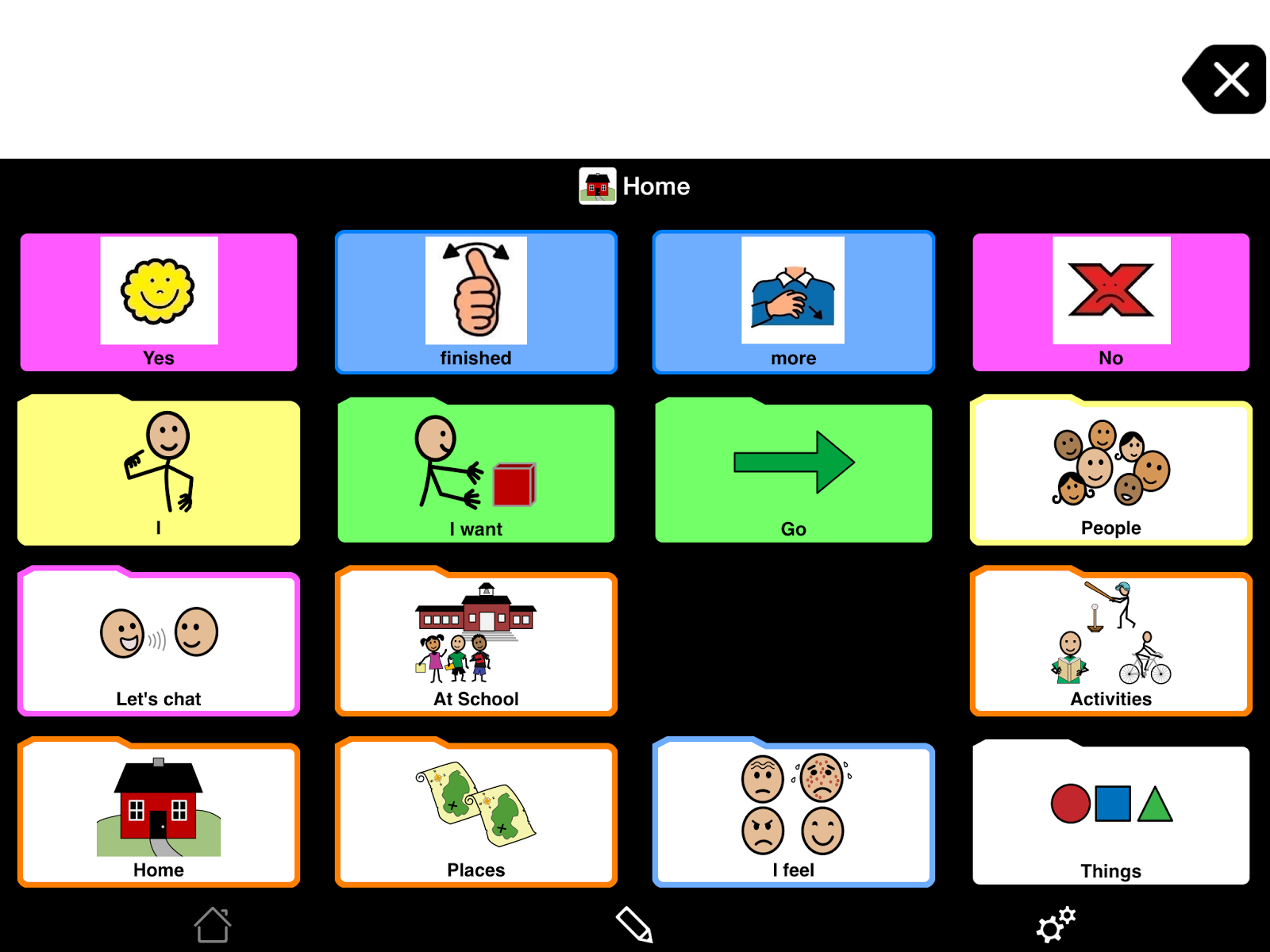
 because it was getting him what he WANTED.  I never really understood language acquisition and certainly not in relation to my son.  I didn't really know what he knew and what he didn't.  His iPad communication was proving he knew and understood a lot.  Here was our conundrum, we had it setup to provide 'sentence starters'.  The most often used folders were 'I WANT', and 'FOOD'.  In the FOOD folder I had it set based on eating times, so food items were grouped in BREAKFAST, LUNCH, DINNER and SNACKS.  Over time I needed to add in Core Words so he could start to enlarge his vocabulary.  This is when we hit problems, he had always had some core words thrown in there, his top line of his setup always had YES, NO, MORE and FINISHED.  Obviously I WANT was core words too, but he wasn't using them in context he was using them because I had 'made' him use them in order to get to where he wanted to be, which was often eating Munchos or cheese!
The School SLT was asking us to include more Core Words and we needed to start adding them in.  So cue more long nights watching videos, reading blogs, and getting on the Proloquo2go parents FB group.  Its here I think I will leave this blog entry as its another story in itself how we progressed Proloquo2go and added core words into his vocabulary.  Believe it or not our story as you have read it so far still has about 2-3 more chapters to go!

Thanks for reading my blog and stay tuned for the CORE WORD CONUNDRUM!

This is a slightly advanced version of our original Proloquo2go home page.  You'll see how each folder is basically a 'sentence starter'.  If he touched 'I WANT', it would speak that to the sentence strip you see above all the buttons, he could then touch FOOD folder, and in that folder a SNACKS Folder, and in there CHEESE.  The sentence Strip would then have 'I WANT CHEESE' on it and he could push the strip to say that sentence out loud. 


Friday, 20 February 2015

Neoprene iPad sleeve turned into a carrier

Hi all I thought you'd all like to see the hack of my sons old neoprene iPad sleeve turned into an inexpensive carrier for him. Unfortunately he needs his iPad in so many places & as he's not completely wheelchair-bound it needed to be more portable than a fixed mount on his wheelchair. Also the fact he's self-propelled in the wheelchair meant any mount would get in his way. 
So I quickly made a carry case to hopefully solve a problem at school. 
It's yet to have been fully tested in the school environment so I'll let you know how it goes. 

Here's a photo of the back of it